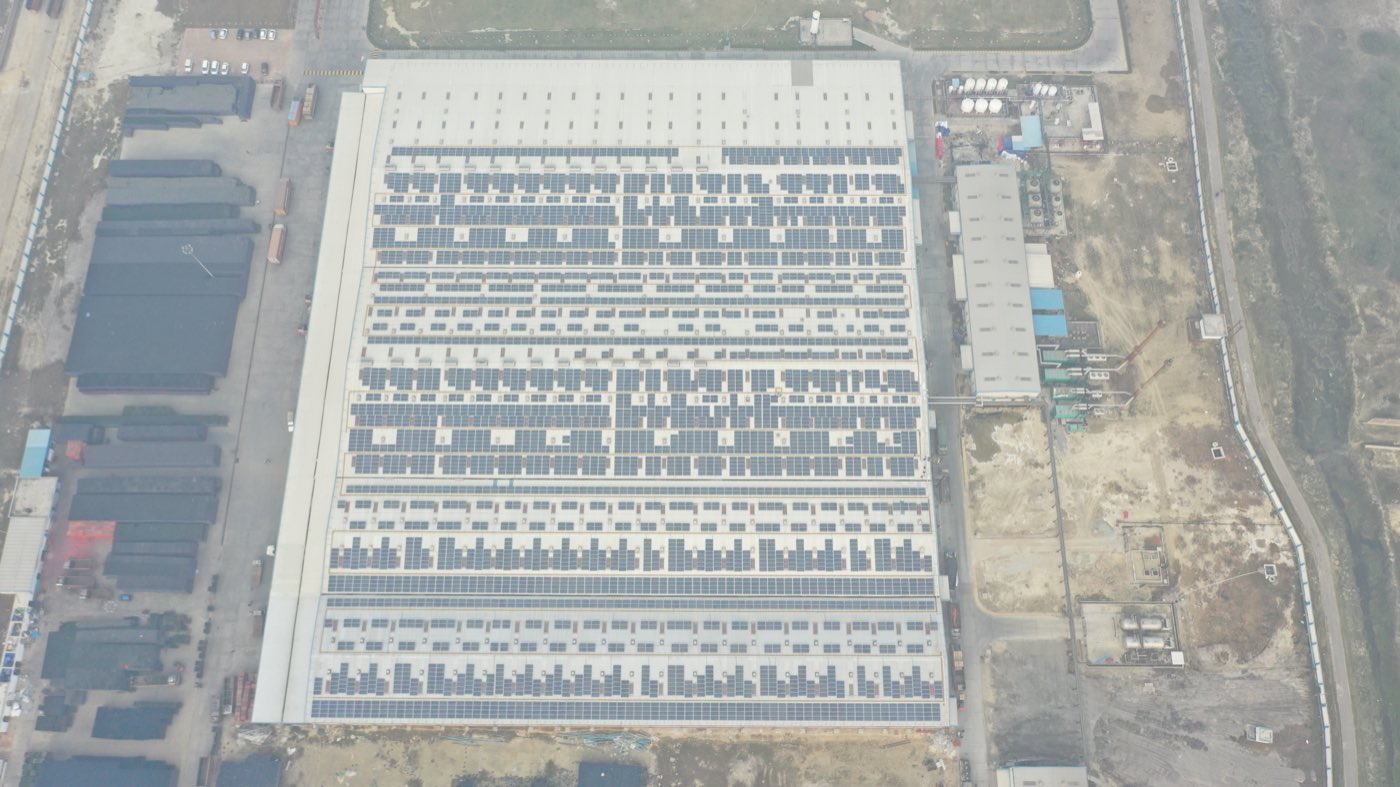
A plant is cheap twice: on day one, or for twenty-five years.
You are not choosing a contractor for six months. You are choosing who answers the phone in year nine, when a string goes down and the savings you budgeted stop arriving.
A plant is cheap twice: on day one, or for twenty-five years.
Senior attention on every megawatt
Decisions are made by the directors who carry the delivery risk, not escalated through an account-management layer. The same bankable guarantees as a national contractor, reached faster, with direct access to the engineer who sized your roof.
Ask what is included as standard
Walkways, lifelines, performance guarantees with liquidated damages, insurance through construction and operations, and an O&M team still answering in year nine. Micro Instruments and Fortis audit those things — which is why they are still on our power.
We engineer first, finance second
Funds sell one product. We size the plant, then structure it — CAPEX, OPEX or open access, whichever your balance sheet prefers, from the same in-house team. If the roof does not fit, we bring open access. A one-product vendor cannot switch.
Waiting has a price
Every year at full tariff on a solar-viable load is a saving you never get back — on a 4.5 MWp-class roof that is crores, not lakhs. And the analysis costs nothing: twelve months of bills, and you will know exactly what waiting is costing you.
Built for energy-intensive C&I.
Highlighted sectors are where we hold a multi-site track record. The same engineering transfers directly to the rest.
Marquee C&I clients.
We also take over plants other people built — see asset management. Re-orders are the only client reference that cannot be manufactured. The company behind them
The plant is the easy part.
Building a solar plant is a few months of work that a lot of companies can do. Keeping it at the performance you were sold, for twenty-five years, through soiling, degradation, inverter failures and staff turnover on both sides — that is the actual product.

What underperformance actually looks like
It is rarely dramatic. A plant does not fail — it quietly drifts. Four percent here from soiling nobody scheduled around, three there from a string that has been down since a monsoon nobody logged, another slice from an inverter derating in summer heat.
- Nobody notices, because the bill still went down
- The gap compounds silently across twenty-five years
- By the time it is obvious, several years of it are unrecoverable
- Which is why we measure performance ratio, not just generation

Built for the climate it sits in
Assam is not Rajasthan. Monsoon soiling, cyclonic wind loading, coastal corrosion and Himalayan snow are all different design problems, and a template applied across them produces a plant that underperforms somewhere.
- Structural design to the site's own wind and load case
- Cleaning regime set by the local soiling rate, not a national default
- Corrosion class chosen for the coastal and industrial environment
- Twenty-plus years of local irradiance behind every yield model
Performance ratio — not a projection.
Most solar proposals guarantee a generation number. A generation number can be missed simply because the year was cloudy, and then nobody is accountable for anything.
Performance ratio
÷ (IRRADIATION × CAPACITY)
PR is irradiation-adjusted. It measures what the plant delivered against what the sun actually gave it that year — so weather is stripped out and only engineering, workmanship and maintenance remain. That is the number we put our name against.
Plant availability
÷ AVAILABLE DAYLIGHT HOURS
Separate from PR, because a plant can be efficient and still be switched off. Availability guarantees, response times and escalation are written into the operations agreement, backed by liquidated damages — contracted, not best-effort.
Savings against grid
— FOR THE CONTRACT LIFE
On power-purchase structures we can commit that your landed cost of solar stays below your grid tariff for the life of the agreement, with the mechanism written into the contract rather than assumed in a spreadsheet.
Run our bidder checklist against us and against everyone else quoting. Two plants with the numbers published are in the case studies. Alongside these: performance bank guarantees issued against contract value, CAR/EAR insurance through construction and operations, ALMM-compliant sourcing where the project requires it, and ISO 9001, 14001 and 45001 systems. Guarantee levels are project-specific and confirmed in the term sheet — the point is that they are levels, not adjectives.
Bankable by design.
The same contractual protections lenders demand, written into Vibgyor contracts — availability and performance guarantees backed by liquidated damages, performance bank guarantees, and CAR/EAR insurance through construction and operations.

- Rooftop Project Developer of the Year — Industrial
- Solar EPC Company of the Year — Large-Scale Industrial
- Company of the Year — Distributed Solar Asset Management
- Team of the Year — Operations & Maintenance
- Project Design Team of the Year — Leadership Award
- Project Excellence Award — Construction Management
Empanelled with NTPC and MNRE; affiliated with USICEF, CREST and Indraprastha Gas Limited. The full credentials set
Send us twelve months of bills.
We size every proposal from your actual consumption — not a rule of thumb. The analysis, site survey and techno-commercial proposal come back free, with no commitment.