
Your partners in decarbonisation
Land, grid, capital, plant — and the next twenty-five years.
Most solar companies start once you have a site and a sanction. We start before either exists. Vibgyor Energy secures the land and the grid connection, engineers and builds the plant, brings the capital if you would rather not, and operates the asset for its full life — on your roof, or from our own solar parks.
We secure the land and the grid, build the plant, bring the capital if you would rather not, and run it for twenty-five years.
You own it, we own it, or we own it together under group captive — the engineering does not change, only who carries the capital.
The companies we power, and the people we build with.
Manufacturing, healthcare, beverage bottling and auto components — plants that cannot afford an unreliable megawatt. Behind them: the tier-one module, inverter and storage manufacturers our plants have been built with — selected project by project, never as a standing arrangement.
Consumers we supply






Equipment across the portfolio




Marks are the property of their respective owners and are shown to identify the consumers we supply and the equipment deployed across the portfolio.
Industrial power in India subsidises everyone else.
C&I consumers pay a cross-subsidy priced into every unit — and the exit has never been cheaper. Open-access solar additions grew 160% year-on-year in Q1 2026. This is no longer early-adopter behaviour; it is India's industrial base repricing grid risk, plant by plant.
C&I consumes 35–40% of India's power but contributes 55–60% of DISCOM revenues. The cross-subsidy is priced into every unit you buy.
Accumulated losses across India's distribution companies. That hole is filled from the industrial tariff — which is why your rate rarely goes down.
Open-access solar added in Q1 2026 alone, up 160% year on year. Against 32.9 GW already in operation, and a record 44+ GW added nationally in FY26.
The regulatory direction is running in your favour. In Uttar Pradesh alone this year:
Sources: Mercom India Research, May 2026; UPERC FY2026 tariff order via Mercom India; Vibgyor market assessment. State positions differ — we confirm yours against the applicable order before quoting.
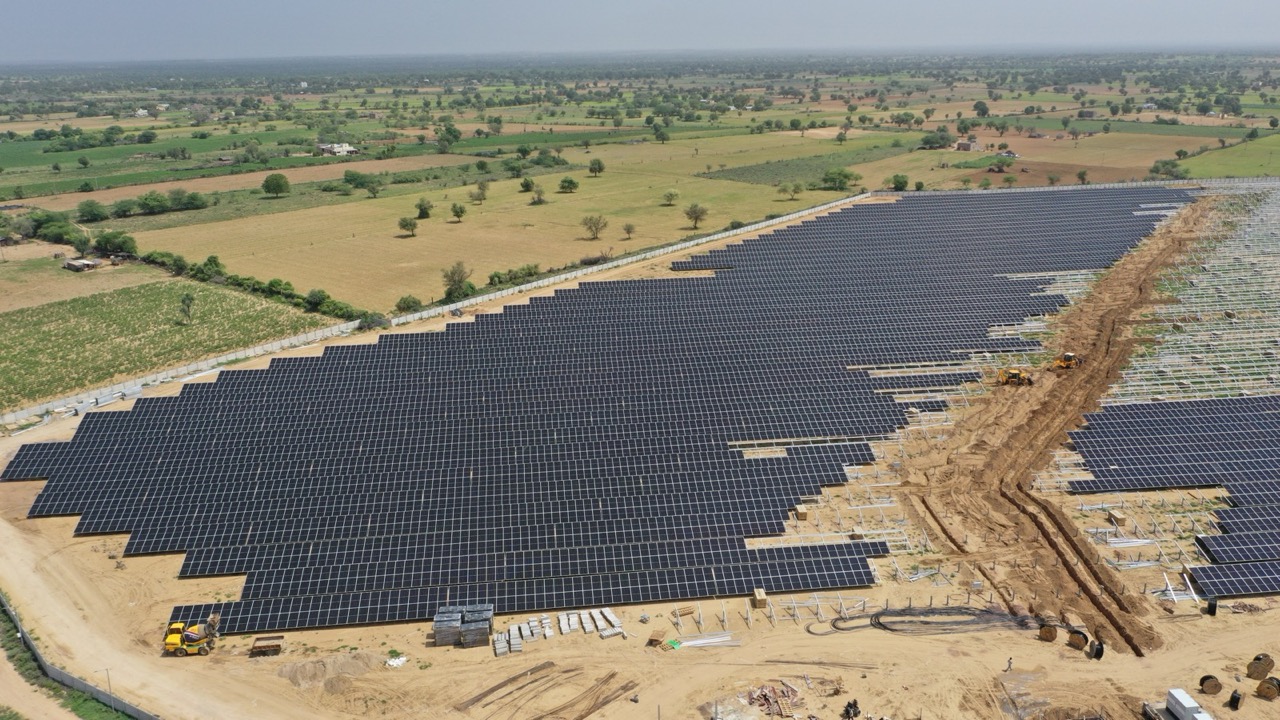
22.5 MWp and 7.5 MWh, going up in the Thar.
A captive plant on about 55 acres at Chamu, Jodhpur district — with battery storage designed into the same interconnection, so the evening peak is served by what the plant made at noon.
The two things that actually gate a solar project.
Not modules, and not money. Land with clean title, and a place in the grid queue — both take longer than the build itself, and both sit inside our own team.
Aggregated parcel by parcel, cleaned and registered before significant money moves.
Connectivity walked through the nodal agency — a signed agreement, not a queue ticket.
Group captive built to keep passing its 26%/51% test in year twelve, not just at signing.
You fund it, we fund it, or we own it together — the engineering does not change.
Proof, in client P&Ls.
Not projections. Operating plants, metered generation, and the savings that showed up on the bill.
Varun Beverages
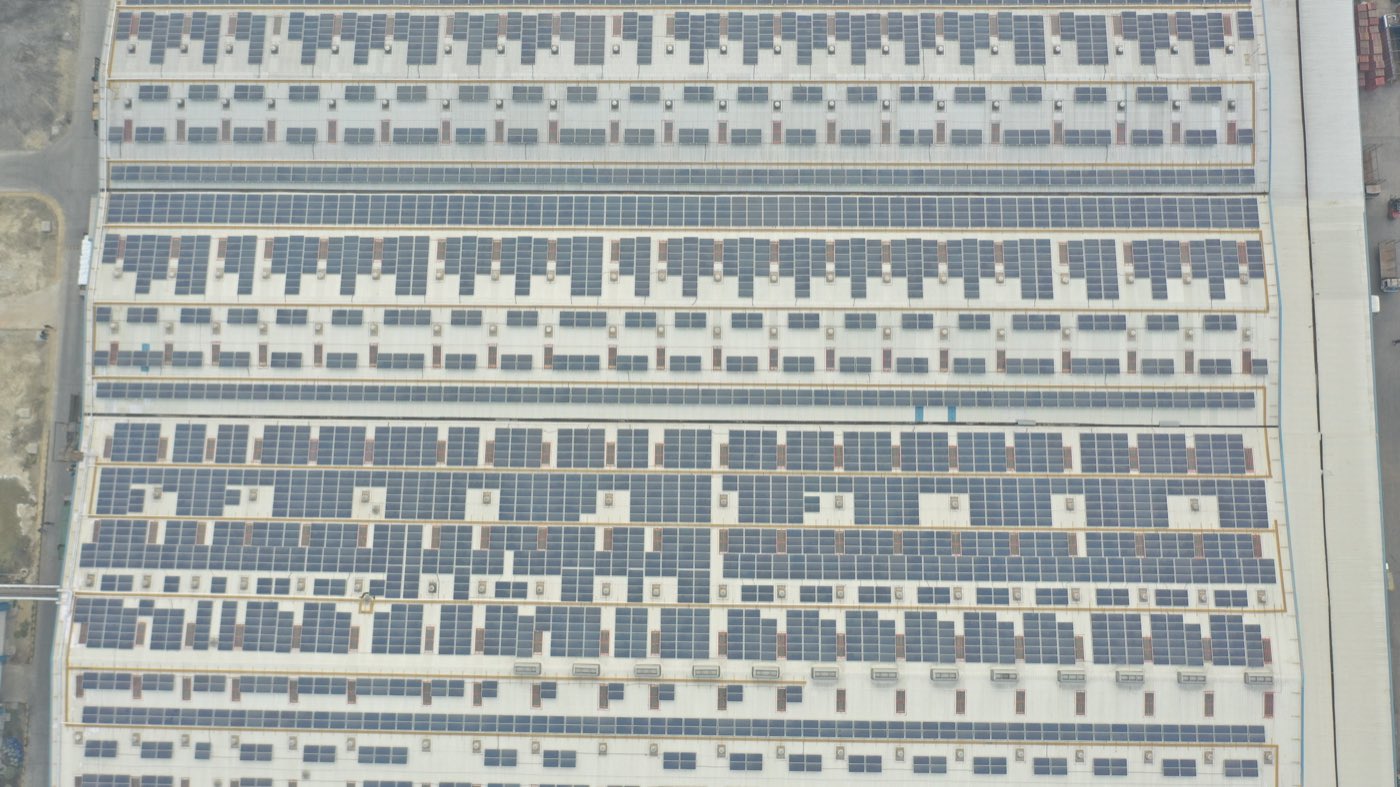
Tin-shed industrial roof. Then ~21 further years of near-free generation.
Moon Beverages
The flagship roof in a five-site group portfolio built with Vibgyor.
Fortis Healthcare
Opening tariff ₹6.22/unit. We build, own, insure and maintain.
Continental Engines
Auto components plant. Smaller roofs work too.
Savings figures are per project records at prevailing tariffs; payback stated for CAPEX projects. Detailed techno-commercial data available under NDA. Two of these in full
Five stages, one payroll.
Most of this industry does one or two of these and subcontracts the rest. There is no handoff between the company that builds your plant and the company that has to answer for it in year nine.
Develop
Land aggregated with clean title, grid connectivity secured, group captive structured to survive audit.
Engineer & build
Turnkey EPC with our own installation and commissioning teams — rooftop to solar park.
Finance & own
Where you would rather not carry the capital, we do — and sell you the power instead.
Operate & maintain
Performance ratio and availability guaranteed for 25 years — on our plants and on other people's.
Manage the energy
Scheduling, banking, deviation settlement — where open-access savings quietly leak away.
Public sector
Empanelled with NTPC; state nodal agency co-development and public tenders.
You either buy the plant — or just buy the power.
Four routes, structured to your balance sheet. Not sure which fits? Discovery starts with twelve months of electricity bills, and our engineering team sizes the answer from your actual load.
You own the asset
- Payback typically 3–4 years
- Accelerated depreciation benefit
- Financing arranged — typically 70:30 debt:equity
You buy the power
- Zero capital investment, zero operating risk
- Typically 10–15% below your grid rate
- Tariff fixed 15–25 years, non-escalating
Own it, fund it over time
- Low equity requirement
- Savings designed to service the repayments
- You keep ownership and the depreciation benefit
Beyond the roofline
- For loads your site alone cannot serve
- Power wheeled from our own solar parks
- No roof required — savings at scale
From your first bill to 25 years of power.
Your only ask today is step one.
Share 12 months of bills
Four to six months is enough to begin.
Site survey & yield study
We assess the roof, load profile and shading.
Techno-commercial proposal
Sized system, generation estimate, savings analysis — free.
Contract — EPC or PPA
CAPEX, OPEX or open access, structured to your balance sheet.
Build, test, commission
Own execution teams; HSE-first delivery; grid liaison handled.
Operate for 25 years
Monitoring, cleaning and guarantees for the asset's life.
Every stage above is our own payroll rather than a chain of subcontractors, which is the reason the schedule holds. Why that matters over twenty-five years
Contribution towards a sustainable environment.
Our plants do not just cut a tariff. Every megawatt-hour displaces grid power that would otherwise be generated largely from coal — and the displacement is measurable, metered and auditable.
Our latest thinking.
The questions that decide whether a project works — answered in full, with the order or regulation that governs each one named so you can check it yourself.


Eight ways into the detail.
Whether you are sizing a first project, comparing structures, or wondering why the plant you already own is not producing what it should.
Rajasthan — 22.5 MWp and 7.5 MWh
A captive plant on about 55 acres with battery storage engineered into the same interconnection. Site film, full specification and the build photographed mid-construction.
Watch the site filmPlants we have built
Three projects in depth — each one there because it solved a different problem — then the shape of the portfolio across 22 states and five countries.
See the projectsWhat changes by sector
Food and beverage, hospitals, auto components, pharma. The load shape decides the project, and it is different in each of them.
Find your sectorWhat your roof is worth
Your monthly bill and your tariff give an indicative size, saving, payback and CO₂ figure, with the twenty-five year cashflow behind it.
Run the numbersIs anyone measuring it?
Most unmanaged plants quietly lose several percent a year. Put a number on the gap, and see what taking a third-party asset over actually involves.
Check the gapTwo plants, two structures
One client bought the plant, the other bought only the power. Both cut the bill — with the generation, savings and payback on each.
Read the case studiesTwenty questions for any bidder
What is actually guaranteed, what happens to your roof, and which approvals are in scope. Tick as you go, then print it. Run it against us too.
Open the checklistNet metering, open access and ESG
The regulation explained without the sales gloss — including where the rules work against you, and the questions we get asked most.
Read the explainersSend us twelve months of bills.
We size every proposal from your actual consumption — not a rule of thumb. The analysis, site survey and techno-commercial proposal come back free, with no commitment.